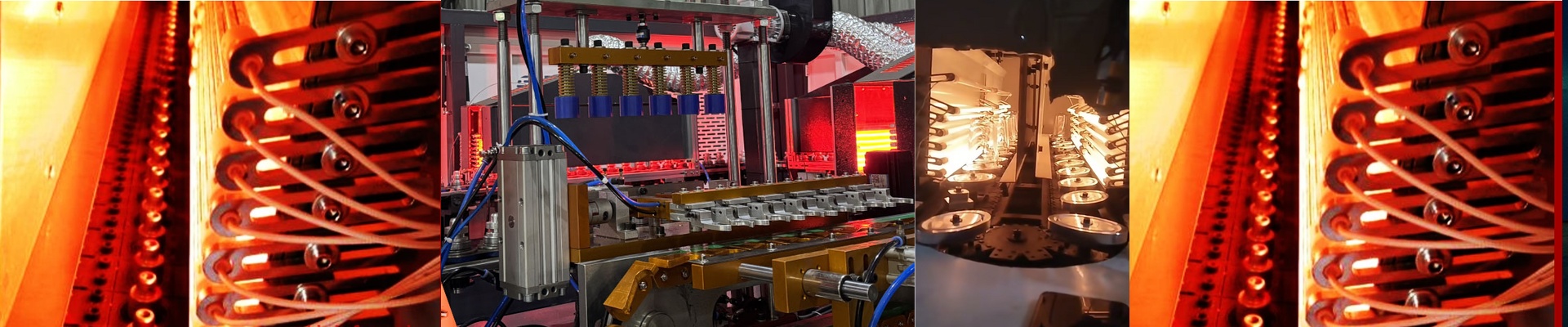
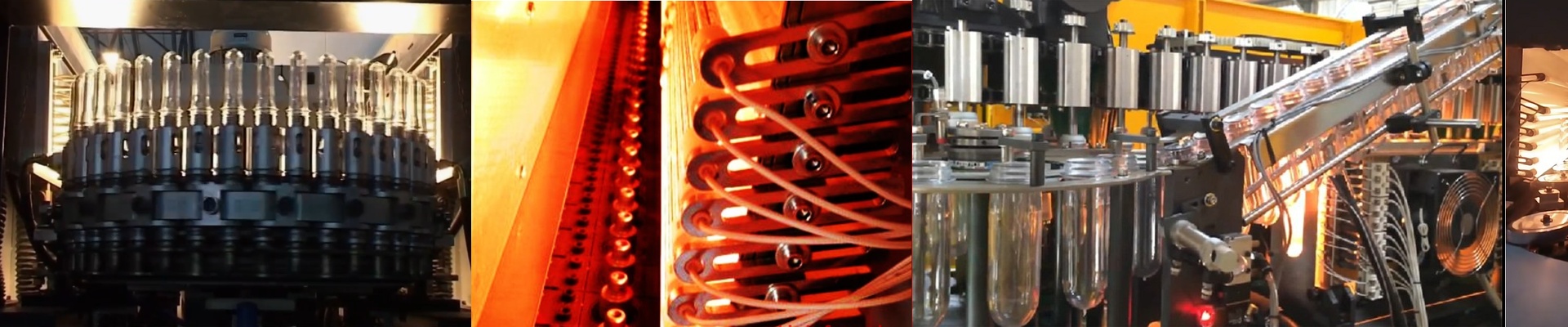
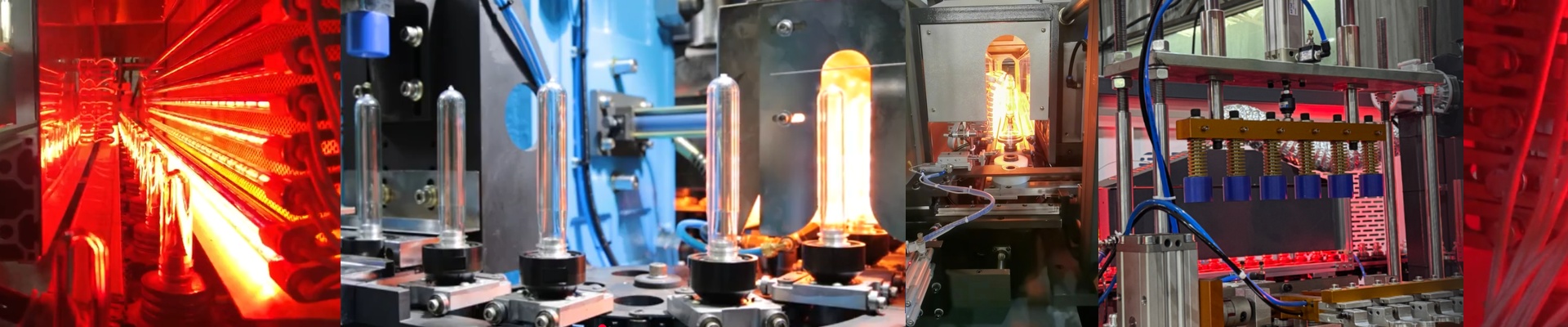
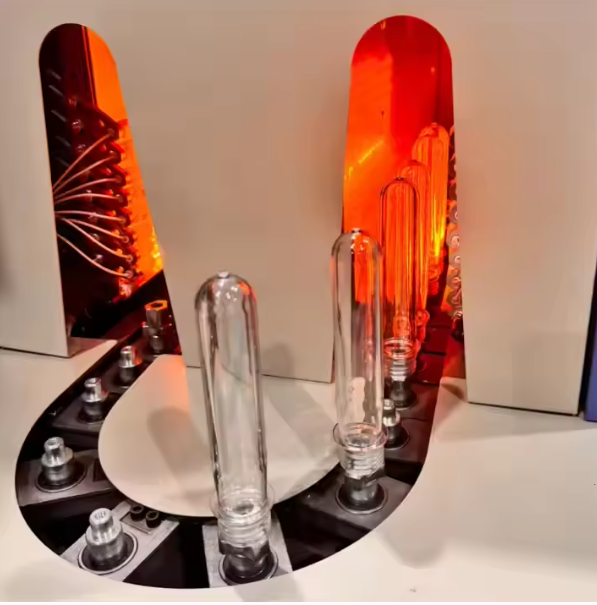
Out on the line, a blown PET bottle gets flagged as reject, and the root cause is simple: the preform never got the right temperature profile. The heating tunnel is on, but the energy just isn’t hitting the material where it needs to. That kind of waste is predictable—until you match the emitter to the machine. What matters technically We build NIR infrared lamps for blow molding with tight spectral control, because you need rapid, deep preform heating without scorching the surface. The output is engineered for consistent short-wave response, so the heating zone settles quickly after a changeover. Each lamp is specified by wattage, voltage, overall length, and connector type, and we offer options with R7s ends and custom terminals to match OEM geometry and mounting. The quartz envelope is chosen for thermal shock resistance in reciprocating tunnels, and the filament geometry is tuned to deliver even radiant density across the preform neck and body. Why it works on the machines you run The point is to drop these lamps into existing blow molders without rewiring the heating section. They’re compatible with major platforms—Sidel Matrix, Krones Contiform, Husky HyPET—plus SACMI, SIPA, and Nissei ASB lines. You keep the same lamp footprint, the same mounting points, and the same control logic. The payoff shows up where it counts: faster thermal recovery after startup, tighter temperature uniformity across the preform wall, and fewer rejects from under-heated or over-heated zones. Energy use drops because the emitter heats on demand and responds immediately, and lamp life is extended by design, which trims planned maintenance windows. Here are the practical details Installation is straightforward, but the heating tunnel is a harsh environment. Keep reflectors clean and aligned—even a small shadow can create a hot/cold band on the preform. Verify voltage at the socket; line sag will shorten lamp life. Expect a warm-up period before the profile fully settles, and make sure your PLC temperature feedback matches the new emitter’s response curve. If you run multiple machine models, order by exact machine, heating zone, and OEM lamp number to avoid length or terminal mismatch.