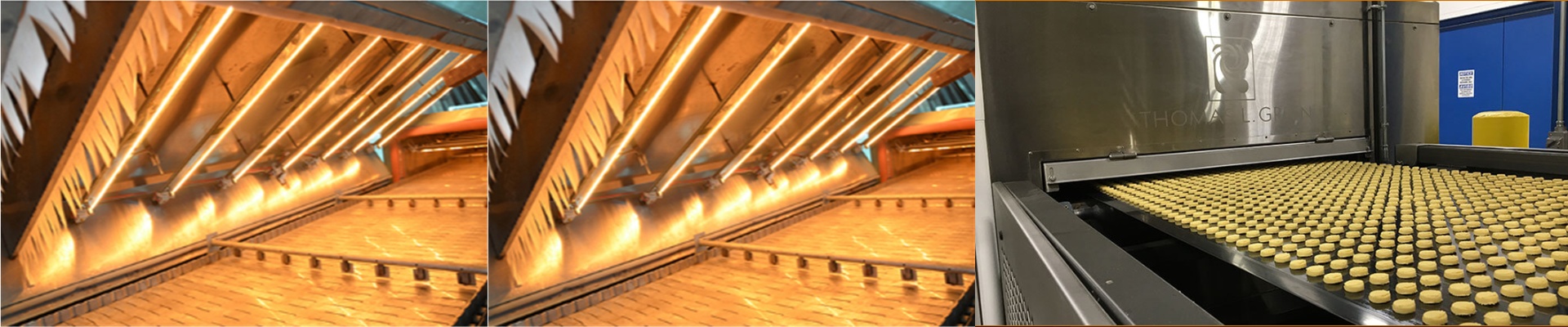
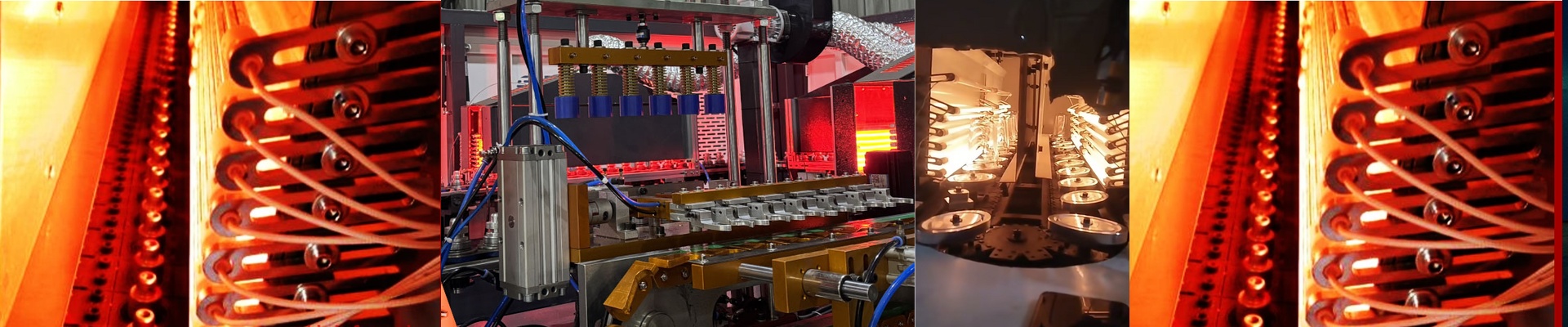
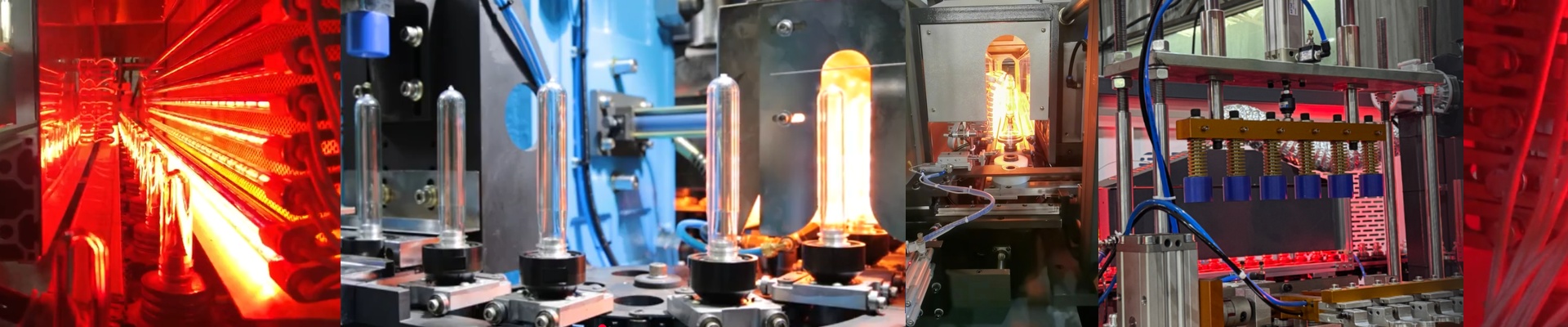
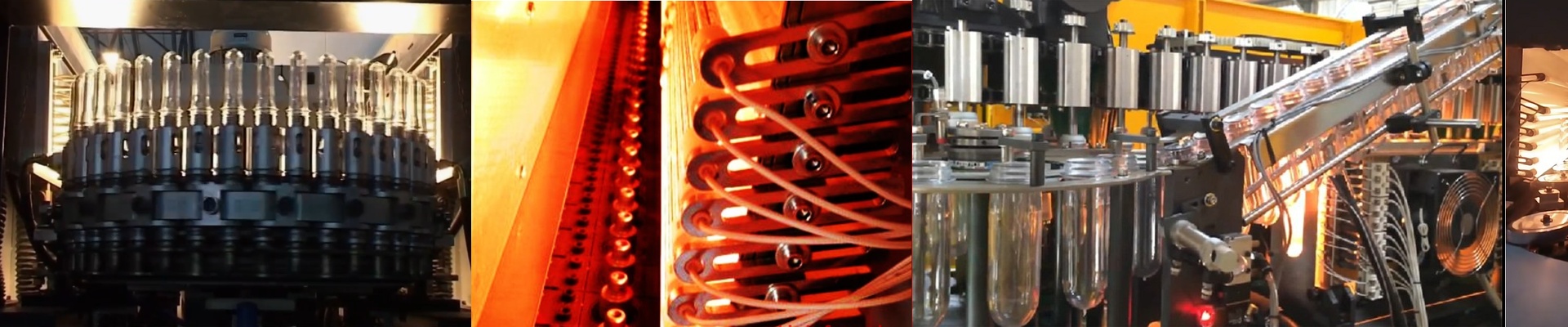
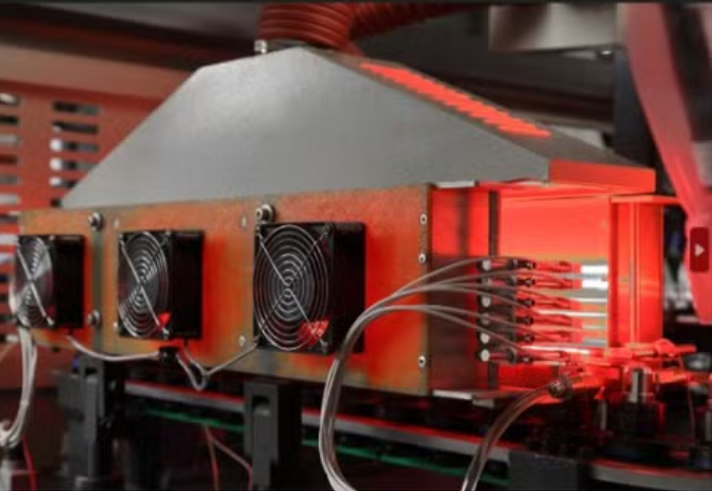
When your Husky blow molder goes down because the heating module quits, you feel every minute in wasted preforms and blown schedules. The heating tunnel has to deliver tight, repeatable temperatures across the preform wall. When it doesn’t, stretch goes inconsistent, necks come out weak, and the bottles fall off spec. We build Husky infrared heating module parts to match the original specs, so the tunnel keeps doing exactly what it was designed to do. What matters under the hood The core is a short-wave infrared halogen emitter, built to fit the Husky heating tunnel geometry. Get the wattage density and spectral output right, and PET heats fast without scorching. Quartz tubes are selected to handle rapid thermal cycling, and we stick with standard R7s connectors so wiring drops in clean. Dimensions hold tight tolerances so the reflector geometry focuses heat where the preform needs it. Voltage and power match the OEM profile, so the control system sees the same load behavior it expects. Why this matters on the line Stretch blow molding has a narrow preform heating window. Restore the original heat profile and you get more consistent bottle wall thickness, fewer pinholes, and better top load strength. Faster recovery means shorter warm-ups and fewer line stops. In practice, that’s more uptime and less scrap. We’ve seen lamps run 5,000+ hours with less than 5% output drop, assuming you keep tunnel airflow and reflectors clean. A few practical notes Installation is straightforward, but uniformity hinges on reflector alignment and cleanliness. Double-check lamp orientation and make sure the reflector focal line stays aligned with the preform path. Expect a small shift in heating PID tuning after the first lamp change—run a quick profile check and tweak as needed. If your line runs heavy color loads, keep an eye on heat absorption. Dark preforms run hotter, so the lamp wattage has to match the actual load, not just the machine model.